Reports from the Knowledge Labs about our recent findings, research topics, and interviews with lifestyle leaders who are creating their own futures.
|
|
| |
How to stimulate your own powers of foresight. Consider the following thought provokers. Ask yourself, in these categories what are the brand new trends and forces? Which are the ones growing in importance? Which current forces are loosing their steam? Which have peaked or are reversing themselves? Which are the "wildcards" about to disrupt us in the future? POLITICAL AND TECHNICAL thought for food: Electronics, Materials, Energy, Fossil, Nuclear, Alternative, Other, Manufacturing (techniques), Agriculture, Machinery and Equipment, Distribution, Transportation (Urban, Mass, Personal, Surface, Sea, Subsurface, Space), Communication (Printed, Spoken, Interactive, Media), Computers (Information, Knowledge, Storage & Retrieval, Design, Network Resources), Post-Cold War, Third World, Conflict (Local, Regional, Global), Arms Limitation, Undeclared Wars, Terrorism, Nuclear Proliferation, Weapons of Mass Destruction, Governments (More/Less Power and Larger or Smaller Scale), Taxes, Isms: Nationalism, Regionalism, Protectionism, Populism, Cartels, Multinational Corporations, Balance of Trade, Third Party Payments, Regulations (OSHA, etc.) Environmental Impact, U.S. Prestige Abroad. SOCIAL AND ECONOMIC Food for thought:
Labor Movements, Unemployment / Employment Cycles, Recession, Employment Patterns, Work Hours / Schedules, Fringe Benefits, Management Approaches, Accounting Policies, Productivity, Energy Costs, Balance of Payments, Inflation, Taxes, Rates of Real Growth, Distribution of Wealth, Capital Availability and Costs, Reliability of Forecasts, Raw Materials, Availability and Costs, Global versus National Economy, Market versus Planned Economies, Generations: Y, X, Boomers, Elderly, Urban vs. Rural Lifestyles, Affluent vs. Poor, Neighborhoods and Communities, Planned or Organic Growth.
Got Knowledge?
|
|
| |
|
|
|
|
The Journal of 2020 Foresight
|
|
| |
|
Saturday, August 02, 2003
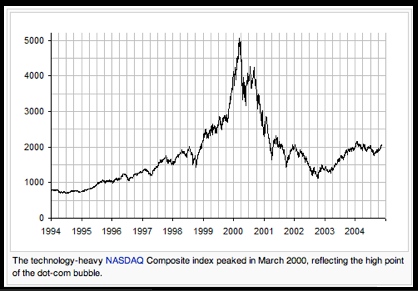
Timeshare This: Correction, Boom, Bubble, Burst, Bust, Correction, Bear-Depression
Chapter Three
By Steve Howard, CKO
The Knowledge Labs
Table of Contents
Chapter One: Basecamp
Chapter Two: The Ridge
Chapter Three: The Outpost
Chapter Four: The Tribal Territories
“Every journey must begin somewhere. For this expedition, the greatest in American history, it began in the mind of Thomas Jefferson. America’s third president had wanted to send an exploring party into the West for many years. In 1783, he had proposed such a venture to Revolutionary War hero General George Rogers Clark, William’s older brother. The Hannibal of the West had declined. Two subsequent attempts to have the West explored and the existence of the Northwest Passage proved also died aborning.”
James J. Holmberg
Journal of 2020 Foresight: Have you ever felt embarrassed when out of the blue you bump into someone who looks really, really familiar, but you can’t place him?
Did we work together in the past?
Do we go to the same dentist?
Were we in the same graduating class?
And, usually for me that embarrassing moment happens in locations out of context. As, when I met Lone Eagle sitting at a bar table underneath the azure blue umbrella on the patio, steps away from the lower pool. Somebody in the Jacuzzi waved to me and I had no idea who he was.
Eagle: Surprise, didn’t you see Lost Explorer?
J2020F: Oh my gawd. That’s who it was. He looks so different in a bathing suit. Or is it this setting, overlooking Medano Beach and the Sea of Cortez? And, I hadn’t had my first 2-for-1 special. But, here they were, the neo - Lewis and Clark and me, their chronicler, in the middle of the resort action in Cabo San Lucas, Mexico.
Eagle: The last time we all got together you interviewed the two of us with Pathfinder and Trailblazer.
J2020F: How well I remember. What Pathfinder described at the end of the evening when the beach bonfire burned itself down to glowing red and orange embers kept me awake until 3 a.m.
Explorer: (Joining us at the patio table) Oh, the second of Dent ‘s two predictions?
J2020F: That period of prosperity is followed by the “mother-of-all-depressions” as he describes it.
Eagle: Starting sometime in 2010 and lasting until 2025, as I recall.
Explorer: Well, that certainly got my attention the first time, too. And, now I feel more of an urgency to make the most of the next 5 or 6 years and then figure out how to hang on for a decade.
J2020F: Nice transition. With both of you here, I’d like to learn more about the Outpost. Trailblazer described the 8 scenarios and ended my stay on the Ridge telling me what the HR executives found when they completed rehearsing their decision. How did your original scenarios turn out? Have you updated them at all?
Eagle: In the Outpost, as you already know, we pick relevant signposts and indicators to monitor as we move forward to our destination. We both discovered that the terrain ahead isn’t smooth like on paper or in plans and in models.
Explorer: It’s more three-dimensional. Over the next two decades from 2003 to 2020, just in terms of an economic climate, we anticipate a correction, boom, bubble, burst, bust, correction, and that long bear / depression.
J2020F: So, like another roller coaster ride. Taking us uphill, then screaming downward again for quite a ride, until 2020?
Explorer: That’s right. We’ve been monitoring Harry Dent’s forecasts with his analysis of three recent bubbles for clues – Japan, Internet, and the Nasdaq.
J2020F: What have you concluded from the first?
Eagle: As a leading indicator, Dent says Japan’s major demographic peaked in terms of a spending wave two decades ahead of our boomers – roughly in 1989 after dominating the marketplace when it emerged in the late 1960s.
J2020F: As a leading indicator?
Eagle: As a scenario for our economy. I mean, when their consumers aged and cut back on spending, Dent says the Japanese government focused on key manufacturing technologies while propping up their real estate market through low cost corporate debt.
Explorer: Those policies set in motion two bubbles – stock and real estate – both of which burst and triggered their long bear market that may bottom out in 2004, according to Dent.
J2020F: Is there another Japanese spending wave any time soon on the horizon?
Explorer: As it turns out, their economy may behave as the mirror opposite of ours. Dent forecasts their next spending wave to exert itself in 2008 or 2009 and extend into 2020.
Eagle: I’m sure you picked up snatches of conversation around the pool here about our upcoming real estate bubble.
J2020F: Uh huh, some of the conversations seem to be about wondering if real estate will suffer the fate of the other two bubbles.
Eagle: When the Internet hit the 10% break out turning point – in the number of U.S. households early in 1996 – it only took two years to accelerate into a bubble from 1998 to 2000.
Explorer: The Internet stock index grew 7 times in 18 months alone, before crashing 92% from its highs.
J2020F: What’s Dent’s prognosis?
Explorer: In 2001, the Internet penetrated 50% of homes and will likely reach early maturity – in 9 out of 10 homes – in 2007.
Eagle: But, he doesn’t expect the index to recover everything wiped out.
J2020F: Why not?
Eagle: Basically, it’s the nature of the Internet. It allows computers, mobile devices, and content to be leveraged, but it’s not a highly profitable product or infrastructure in itself.
J2020F: So it enables other industries to become more efficient, but doesn’t hold up as a viable business model?
Explorer: When you peal away the layers, you see that semiconductor chips and software are the driving technologies.
J2020F: Now, what about the third bubble, the Nasdaq?
Eagle: It actually began before the Internet index, sometime in 1995, but accelerated in parallel – from 1998 to 2000.
Explorer: As it turns out, it didn’t wipe out as much of the previous gains as did the Internet, nor did it last for two decades like the Japanese bubble.
J2020F: Knowing what you know now, how do you apply it?
Explorer: We’ll go into more detail later, but based on Dent’s work, we’re focusing on 5 time periods to shift our stock market and real estate investments: 2004 to 2006, 2006 to 2008, 2009 to 2010, 2015 to 2020, and 2020 to 2023.
Eagle: The strategy for the first period actually began in the late 1990s. Dent recommends buying growth stocks – both small and large capitalizations – but more large, while heavily investing in international emerging countries.
J2020F: So, if I’ve got a 401K or an IRA and want to invest in mutual funds I’m looking to diversify into those funds?
Eagle: Right. Dent recommends 15% of your portfolio should be in the small caps, with 35% in large cap, another 10% in Real Estate Investment Trusts, around 20% in an international fund – emerging countries in Asia (but, not Japan yet), Latin America, Russia and eastern Europe – another 10% in developed countries, such as Europe, Hong Kong, Canada or Australia, and the last 10% in high-yield bond funds.
J2020F: What about during the next phase – late 2006 to late 2008?
Explorer: This period precedes the major correction, so he suggests moving out of stocks into long-term treasury or very high-quality corporate bonds.
Eagle: Then during the next period – 2009 to 2010 – or, as Dent says after the first serious U.S. and global stock correction, shift 20 to 40% of your bond portfolio into Japanese stocks, and some European.
J2020F: So, you start to buy Japanese stocks ahead of their run-up based on their next demographic spending cycle.
Eagle: That’s right . You’re not really trying to outguess the markets in the short-term. Rather, you’re looking for long-term buying opportunities.
J2020F: But, what about during the depression?
Explorer: Between 2015 and 2010, Dent recommends a strategy of buying global stocks of emerging countries and small cap stocks in the U.S. Plus, he says step back into real estate to take advantage of the exurban migration.
J2020F: And, what about his investment strategy during the fifth time frame?
Eagle: From 2020 to 2023, he forecasts another long-term bull market. So, he recommends a return to a classic portfolio – 30% in large caps, 20% in small caps, 10% in real estate, 30% international, and 10% in bonds.
J2020F: A moment ago we talked about the real estate gossip around the pool. And, you said Harry Dent predicts that investing in the Internet technologies might not be the best long-term strategy. So, what’s the connection between the two?
Explorer: Dent says new technologies provide us with new means of communication and with alternative energy sources, almost any geographic area can support both or personal and professional goals.
J2020F: So, he’s predicting support for the “It’s Wired (Wireless) – Doing What I Want Anywhere” scenario sooner than later?
Eagle: Correct. He cites the following four trends as the reason:
“Basic innovation in communication technologies is allowing more people to relocate their homes to small towns and exurbs, and telecommute to business;
The baby boomers are moving into their vacation-home-buying years, which, in combination with the first trend, will stimulate demand for property in attractive resort towns;
The echo baby-boom generation is now moving into its household formation years, which will stimulate demand for apartments and rental property in the cities, and has already caused commercial property in these areas to appreciate; and
There is a broad geographic migration towards areas of the country with warmer climates. You can expect the first three trends to be accentuated in the southwestern United States.”
J2020F: And, the bottom line, then becomes select the highest growth area -- south of the Mason-Dixon line, and to the west. Concentrate on a region based upon your climate, lifestyle and growth stage preferences.
Explorer: Remember that when Oscar picks us up tomorrow morning for our timeshare presentation.
Got Knowledge?
Copyright ©2002 - 2006 Aarnaes Howard Associates. All rights reserved worldwide.
4:43 PM
Wednesday, August 13, 2003

Degrees of Kevin Bacon, Or Doing What You Love with Other Birds of a Feather
Chapter Three: The Outpost
By Steve Howard, CKO
The Knowledge Labs
Table of Contents
Chapter One: Basecamp
Chapter Two: The Ridge
Chapter Three: The Outpost
Chapter Four: The Tribal Territories
“From March to June 1803 (Meriwether) Lewis spent time at the U.S. arsenal in Harper’s Ferry, Lancaster, and Philadelphia in securing arms, overseeing the design and construction of an experimental iron frame boat he dubbed ‘The Experiment,’ being tutored by the leading men of science and medicine of the day, and procuring supplies. Upon his return to Washington in June, Lewis invited his friend and former commanding officer, William Clark, to join him as an equal partner in the undertaking. After wrapping up his affairs, Lewis left Washington for Pittsburgh on July 5. He would not return to the capital city for three and one-half years.”
James J. Holmberg
Journal of 2020 Foresight: Both of you told me the initial learning expeditions began with Harry Dent’s list. The one that attracts individuals and businesses yearning for open, innovative, social and professional climates – the nine new growth areas in real estate. And, how the knowledge base can plot migration paths from one neighborhood to another throughout the West and to some resort islands.
Explorer: Grey Owl synthesized the first phase of the knowledge base from multiple expeditions – roughly a dozen. The working title of the experiment was “Doing What You Love with Birds of a Feather.”
Eagle: Speaking of which, couldn’t we use it to find out where Grey Owl is? We figured out swallows and Father Serra meant San Juan Capistrano, and we realized San Juan was the name of the National Forest …
J2020F: What do you mean?
Explorer: He means cheating. You see, the knowledge base is our choice of LAST resort. When we can’t put all of the clues together to come up with our destination answer. We know that he’s somewhere in the world with one or more expedition team members. He could be with the tropical resort team, or with “It’s Wired, Do What You Love Anywhere” team or the innovation-growth team, or the Idaho team, or the new eco-topia team, or the 34 to 45 Age Group team, or the elite suburb team, or the country squires team, or the ….
Eagle: In three clicks, we could probably use the clues to search the experience and research generated by the teams following Dent’s initial list and come up with the answer.
J2020F: You keep mentioning Dent’s list. What is it?
Eagle: Harry Dent’s brilliant. He researched a lot of the best places to consider for a lifestyle change, a real estate investment, and or an entrepreneurial venture.
Explorer: In priority order, from best to least, for finding all three in one place, he lists:
Resort Towns
Small College and University Towns
Classic Towns
Revitalized Factory Towns
Exurbs
Suburban Villages
Emerging New Cities
Large-Growth Cities
Urban Villages
J2020F: So what this means, is the knowledge base grows as members of learning expeditions explore the places which represent the best fit for their preferences?
Explorer: And make good on their commitment to make it better than it was when they began to use it.
Eagle: In the discovery phase, we’re more interested in connecting people together who share the same kinds of interests and preferences with each other, than we are building a sophisticated database. That will come later.
J2020F: Let me see if I get this right. This is more like mining knowledge, but using the rules of thumb, tools and resources that the miners themselves use instead relying on a sophisticated computer program?
Explorer: In a way. The knowledge nuggets each of the miners discovers are theirs. Unlike gold or silver mining in the California gold rush or in the Colorado towns, knowledge doesn’t lose its value when it is given away or divided into shares.
Eagle: Did you say divided into shares? Read back Grey Owl’s second set of clues.
Explorer: You mean something about “the basic math of howling in the water that runs both ways?”
Eagle: Basic math might refer to adding, subtracting, multiplying or dividing.
J2020F: Can we stay on track? So, you’ve been saying the purpose behind the knowledge base is to build a network of knowledge nomads? Can you explain how it works?
Eagle: Learning expeditions examine whether or not a new town or area fits -- the birds of a feather feature. You can determine if a town is attracting people like you. You can tell if the people who live there are ones you'd enjoy as neighbors. As they gather information to make their own decisions, they share what they learn with each other.
Explorer: As current and future expedition members investigate features about an area, using the knowledge base saves them time. Because of its community of tribes feature – the network of people – it also speeds up the process of making contacts and getting introductions.
J2020F: From an investment standpoint, how can you tell if the town will enjoy a higher appreciation in real estate?
Eagle: You’d have to find out if it is attracting the trend setting lifestyles of the more affluent. If it is then, the area fits your criteria. And, the good news is Grey Owl has synthesized a lot of intelligence gathering from several expeditions to help you decide.
Explorer: And, you’d want to examine your appetite for risk with the highest potential for appreciation – selecting a town in the innovation growth stage vs. an investment in a less risky, but with less appreciation potential that might be found in an emerging new city or late growth city.
J2020F: And you’re saying Grey Owl’s knowledge base helps you with your decision? Give me an example.
Explorer: Let’s see. How about one that demonstrates how the birds of a feather phenomenon cuts across several learning expeditions – each with their own shared objectives – and when synthesized yields better knowledge useful to the whole community?
J2020F: You can do that?
Eagle: Sure.
Explorer: Careful. He’s bending the rules.
J2020F: What do you mean?
Explorer: He’s just found a legitimate way to solve the riddle by answering your question.
Eagle: So?
Explorer: So, let’s see you pull this one off. You’re about to see the famous “6 Degrees of Kevin Bacon” in action!
J2020F: You mean how you can find a connection between any two famous celebrities through their direct and indirect association with a Kevin Bacon movie? As in, his commercial on T.V.?
Explorer: Yup, the statistical data has been around for years. The basic observation is that anyone can be introduced to any other person simply by asking a circle of friends. Time and time again introductions to that person can be arranged by referral in six or fewer contacts.
J2020F: So, the first degree represents your first request to a friend or relative, for instance. They refer you to a most likely contact within their circle of associates – the second degree. And that referral connects you to a third degree of probable gate-keepers, and so on?
Explorer: That’s right.
Eagle: Give me something to start with. What to you want to find? And I’ll ask some questions that will help me tap into some of the on-going expeditions so we can find the answer.
J2020F: OK. How about if I’m interested in investing in a place with high appreciation and it would have to appeal to someone living in neighborhoods in say, Dana Point or San Juan Capistrano – where you launched your original learning expedition – and say someplace else like Austin, Texas.
Eagle: Good. Now, what I’m going to do is take advantage of the past learning already in the knowledge base generated by teams investigating the top of Dent’s list – the resort towns, but at the innovation phase. Just let me fire up my laptop, here. And, you said, what else?
J2020F: Dana Point and San Juan Capistrano on the coast in south Orange County, remember?
Eagle: Right and also we want to dip into the “Birds of a Feather” (BOF) in Austin – right? Do you want to narrow it down? Where in Austin?
J2020F: OK, what’s Austin famous for? How about Dell computers? Let’s do that. Take a look at BOFs on the outskirts of Austin somewhere south of Round Rock, maybe midway between Leander and Austin. What do you show there?
Eagle: How about what looks like the Wells Branch area on the map?
J2020F: Perfect.
Eagle: Let’s see. I don’t think we’ve tried to Kevin Bacon-ize these areas before. But, here goes. “Trust the process, Luke.”
Explorer: Some times he gets overly dramatic. I can tell you from our experience that you played right into his hand. We’ve discovered we can track the BOF migration in 6 degrees or less to almost anywhere from Dana Point.
Eagle: Oh, great. Go ahead and steal my thunder!
Explorer: But, I’m not so certain he can solve Grey Owl’s riddle as well. This should be fun.
Got Knowledge?
Copyright ©2002 - 2006 Aarnaes Howard Associates. All rights reserved worldwide.
8:23 AM
Wednesday, August 06, 2003

All In The Family: Where the Rainbow Hits the Road
Chapter Three: The Outpost
By Steve Howard, CKO
The Knowledge Labs
Table of Contents
Chapter One: Basecamp
Chapter Two: The Ridge
Chapter Three: The Outpost
Chapter Four: The Tribal Territories
"In 1802, Jefferson had read Alexander Mackenzie's published account of his journey across Canada to the Pacific in 1792-1793. In his conclusion to the book, the Scotsman urged the British government to seize control of the Oregon Country in order to dominate the lucrative fur industry of the region and trade with the Orient. Jefferson was an Anglophobe, and the possibility that a rival and potential enemy would control this country and its trade, caused him such consternation that he moved from wishing to doing concerning an American expedition across the continent."
James J. Holmberg
Journal of 2020 Foresight: I had a lot to think about. I'd be committing to a timeshare investment covering the timeframe between 2004 and 2034. I recalled my conversation with the groom's neighbor when he asked where we were staying and when we told him, he said, "Oh, yes. The whale in the pool."
After our champagne glasses were filled, he answered my question about his timeshare by telling me he picked up two from the county of San Bernardino.
He paid $1,000 in a tax sale for timeshares in Palm Desert, California. "We've never stayed there," he said. "They only pay a yearly maintenance fee and an association-trading fee to go to wherever is listed." Explorer interrupted my thought pattern.
Explorer: You asked us how our scenarios turned out and if we updated them. I'd have to say we believed the future we co-designed would unfold faster.
Eagle: I've always been five years ahead of the market. I'm afflicted with the ability to visualize how trends unfold. So, when I see where we're all headed I want it to happen in 2004 instead of in 2009 when the mass market materializes.
J2020F: So it sounds like in hindsight, you've adjusted your plans based upon Joel Barker and Harry Dent's s-curve models?
Eagle: Now I'm bucketing key indicators into Dent?s Innovation, Growth, and Maturity percentiles.
J2020F: Do you mean you track indicators as forces move from .1% to 9%, then from 10% breakout to 25% and from 50% to 75%, and then to 90%?
Explorer: We do, but it's not an exact science. It's more of an art form. But, we're using his innovation, early growth, mid-growth, and late-growth, early maturity classifications in new ways.
Eagle: You've already covered technology diffusion lifecycles and the stages of an organization's lifespan using his categories. Now we're subscribing to his migration growth rates to select the best opportunities for lucrative jobs, entrepreneurial ventures and real changes in lifestyles.
J2020F: If I follow you, you're using the s-curve turning point percentages for the third set of options --managing a portfolio of tangible and intangible assets to produce income for a lifetime?
Explorer: Yes. Back when we crafted the original four scenarios, I felt content to do what I loved in my same geographical region. Now, I?m witnessing classical late maturity indicators -- my resort suburb comes with a higher cost of living, more real estate development, growing traffic congestion and a growing number of less healthful smog days.
On top of that, as the weeks and months go by more and more employers downsize their operations locally. As part of cost cutting programs in reaction to the state's business climate and their industry consolidation forces, they're moving to other more economical geographic locations.
J2020F: So, as the once stellar quality of life tarnishes, you're taking the time to find the next best place in which to live and invest?
Eagle: Well, for me, Dent said it best, "The business, career, and, especially the real-estate opportunities are likely to be much stronger in the best boomtowns and cities."
Explorer: We find, more and more of the expeditions in Basecamp focus on a making a major lifestyle change. A lot of people are fed up. A lot of people feel trapped and permanently temporary. A lot of people hate what they're jobs have become and long for something else.
Eagle: While the numbers we've tracked so far describe baby boomers at a crossroads in their lives, we find others aren't waiting to make the same kinds of decisions -- parents with a new family in their early twenties, for instance.
J2020F: By numbers, you mean the top 10 out of 100 predictions and trends?
Eagle: That's right. Boomers, together with their children and grandchildren in some cases, and their parents represent the social and demographic agenda for decades to come.
J2020F: It's all in the family -- the blended, extended family.
Explorer: So this is a great time to sit down with your spouse, extended family, relatives or friends and really consider where you would want to live.
Eagle: Then assess how the next 5 or 6-year boom can open up your opportunities -- before it's too late -- not just for lucrative jobs or entrepreneurial ventures, but for a real change in lifestyle. How will technology allow us to live in a place we might not have considered?
J2020F: With that new sense of urgency, you mentioned earlier, right?
Explorer: Of course,
Eagle: In the Outpost we build on the decisions and insights gained in the previous two locations.
J2020F: What do you mean?
Explorer: In Basecamp Pathfinder helps us to assess our past, present, and future -- lessons we've learned in hindsight, together with our aspirations for a better, more enjoyable future.
J2020F: So for example, Dent's prediction of the great population shift, as a result of the new American Dream?
Explorer: He defines it as earning big-city incomes, but living in small towns. We've already discussed how as this migration trend picks up it will drive a decade-long real estate boom in customized-lifestyle communities.
J2020F: So, we should do what? Invest in locations at various growth stages of S-curve growth?
Explorer: Or at least consider opportunities never available to us before.
J2020F: So, we don't have to be trapped in the same old grind?
Explorer: Dent predicts that working at a distance from centralized corporate offices will become an increasingly -- popular alternative for all kinds of business people, not just for the writers, consultants, salespeople, and entrepreneurs who enjoy this freedom now."
Eagle: At the Ridge, Trailblazer helps us assess the 11 options we might consider by helping us anticipate how external forces will likely play out -- either to accelerate or hinder the progress along a chosen path.
J2020F: So, in the Outpost you implement your plans and decisions? Can you give me an example?
Eagle: Sure. Pathfinder helps us surface what's important to us in our life. From the spiritual and personal side, we reflect on what's important to us at our particular lifecycle. We consider our current situation in terms of
Family,
Friends,
Fitness,
Health,
Hobbies,
Recreation,
Education,
Investments, and
Generational issues and challenges.
Explorer: In addition to what's important to your personal life, he has us examine our Values -- what we want in terms of our private life in our Neighborhood and Communities: our life as
Consumers, as members in
Clubs,
Organizations, and
Volunteer organizations
J2020F: Right. And the chosen path, one of the 11 options, has to satisfy your personal and professional aspirations? The chosen path has lifestyle implications, then, right?
Explorer: Yes, that's correct. We believe more of us will be able to earn big city incomes by doing-what-we-love with birds-of-a-feather in higher quality-of-life communities.
Eagle: What we'll spend more time on here are the second and third set of options:
Work for self -- Start a business, buy a business, buy a franchise. Develop a consulting practice or pursue a portfolio career; and
Maximize tangible and intangible assets to buy independence and free time, volunteer, or live off investments and freelance to supplement income.
J2020F: So, this is where the rainbow hits the road?
Explorer: It's where all the puzzle pieces come together to form a pattern, and then a strategy. With some preliminary research and intelligence gathering, the expedition moves forward on the best path towards their destination.
Eagle: The half of dozen puzzle pieces -- for a big city cash flow in a higher quality of life community -- starts with some basic preferences:
Type of living environment -- climate, lifestyle, density preferences
Presence or absence of certain professional infrastructure and services: what has to be in place to provide business opportunities for starting or buying a business?
Will you be able to meet cost of living and income needs that fit your interest, expertise and most enjoyable / transferable skills?
J2020F: So, in the Outpost, individuals and teams begin with research and intelligence gathering about broad regions based on climate, lifestyle, and general growth potential?
Eagle: That's right. We begin like those fishermen over there -- see them casting out their net?
J2020F: Yes.
Eagle: We cast out a wide net, and then narrow them down the best choices for us to pursue.
Explorer: The mistake most of us make is fishing with a small net.
J2020F: So, we screen out a lot of fulfilling opportunities without realizing it?
Eagle: If there's one point we want to get across, it would be this. Simply put, we now have the flexibility to live anywhere we please and not be beleaguered by a long commute between home and office.
Explorer: If you've been following everything up to this point in the journal, you'll see our research and intelligence gathering concludes that with the onset and acceptance of new technologies, means of communication, and energies, almost any geographic area can support both or personal and professional goals.
Eagle: Harry Dent offers some things to look for: "a new look that includes intelligent town planning for increased human interaction; and abundant open space; flexibility in home design; planning for safety; shared facilities; and high-tech communications infrastructure."
J2020F: So, the only real question becomes, which one is right for you?
Got Knowledge?
Copyright ©2002 - 2006 Aarnaes Howard Associates. All rights reserved worldwide.
7:41 AM
Wednesday, August 28, 2002

Oil Shocks, Japanese Invasion, Revenge of the ‘70s
Chapter One
By Steve Howard, CKO
The Knowledge Labs
Table of Contents
Chapter One: Basecamp
Chapter Two: The Ridge
Chapter Three: The Outpost
Chapter Four: The Tribal Territories
“By the end of the decade (1970s), American television manufacturing was effectively dead, the US steel industry had been eclipsed, and everyone wanted to know how the Toyota Production System worked.”
Harry Dent
Journal of 2020 Foresight: Coming into the early ‘70s, US companies faced little foreign competition at home. The industrial revolution hit on all cylinders producing great quantities of products destined for the mass market. But supply outstripped demand, so prices fell with increasing competition.
Pathfinder: The recession in 1970 didn’t help. It was a classic over-reaction to the over valuation of stocks. Similar to the boom ending during the millennium passage from the 1990s, the stock market figured out it couldn’t sustain growth forever and corrected itself in a sharp downturn.
Lone Eagle: Not too long after the US encountered the first oil shocks when OPEC decided to control the flow of oil to the West.
J2020F: And that period was followed by a long downturn--from 1973 to roughly the mid-1990s--in profit and productivity in the US.
Lost Explorer: Joel Kotkin and Susanne Trimbath wrote, “The most important change was wrought by the arrival of Japanese corporations as major players in the world economy. In 1973-74 alone, the New York Stock Exchange composite fell by 44%. Equities did not recover until the early 1980s.”
Trail Blazer: While investors left the stock market in droves, the stock market's prolonged stagnation in the 1970s did not signify the end of prosperity.
J2020F: So, pinched on the one side by Japanese competition and, on the other, by dependence on Middle East oil, the US economy had to reinvent itself.
LoEx: And, remember like today, corporate scandals were undermining confidence in Wall Street. Kotkin and Trimbath recall, “There was even widespread criticism of the accounting profession, which was accused of financial shenanigans to justify the wild ambitions of irresponsible corporate managers.”
PF: And like today, some U.S. companies disappeared, but others cleaned up their accounting, restructured and met the next decade head on.
TB: People forget that the 1970s also permanently altered the balance of power among the country's regions. The old industrial bastions of smokestack power in the Midwest and East coast yielded to the more entrepreneurial, flexible and individualistic economies of the West.
LoEa: Economic restructuring laid the foundation for the US reemergence in the mid-‘80s, after a period of rampant inflation in the '70s and '80s.
TB: Like today, the pension funds' need for higher returns on investment were then a major factor pushing corporations in the 1980s to "restructure" and earn higher profits.
PF: Measured from 1972 to 1981, the net gain in the blue-chip Standard & Poor's 500 index was a minuscule 3.8% as investors stayed away.
LoEx. And, inflation peaked in 1980, followed by a period of deflation between 1980 and 1986.
LoEa: Harry Dent, arguing to support the tie between workforce entry by the boomers as a cause of inflation, wrote, “Inflation came down from over 20 percent in 1980 to as low as 3 percent in 1986.” The corporations had assimilated the generation and by the mid-‘80s, instead of causing inefficiencies, the boomers began contributing to the bottom line.
J020F: So, the moral to the story is that the economy endured recession, inflation, deflation, low productivity and severe investor lack of confidence. So much for the past, what about the future?
Trailblazer: It must be time to review our top 100 trends!
Got Knowledge?
Copyright ©2002 - 2006 Aarnaes Howard Associates. All rights reserved worldwide.
6:53 AM
Monday, July 17, 2006

Time for Doing What We Love, Living Where We Want, While Leaving a Legacy
Chapter Four: The Tribal Territories
By Steve Howard, CKO
The Knowledge Labs
Table of Contents
Chapter One: Basecamp
Chapter Two: The Ridge
Chapter Three: The Outpost
Chapter Four: The Tribal Territories
“That’s where it happens. There’s a beautiful map of Greendale that’s drawn by some old Greendale person, I suppose. You know these maps where everything’s flattened out, it’s like you see it but it’s on a big piece of paper. You see city hall and a little drawing of city hall. A very nice map. Right at the end of the map, Highway One, Coast Highway, right there on the edge is where this happens.“
Neil Young & Crazy Horse “Greendale”
DOUBLE NICKEL RANCH. For a growing majority of Baby Boomers looking at the decades in front of them, wrestling with elder care issues today and empty-nests today or tomorrow, there’s a growing sense that now is the right time to figure out how we can do what we love, choose where we want to live, and leave a legacy by truly making a difference.
Journal of 2020 Foresight: I want to invite Lone Eagle and bring Pathfinder back into the discussion about this generational snapshot in time.
Pathfinder: It’s the extended Boomer family, stupid!
J2020F: Tell us what you really think!
Trailblazer: I agree. We’re in a transition to a work force and consumer society that is almost entirely populated by Baby Boomers , Generation Xers, and the Millennial Generation Yers.
Eagle: We already know the majority of baby boomers have already reached their forties and for two decades most will edge into their late fifties and early sixties.
Pathfinder: At the same time, those in generation X will be reaching their 30s, while the millennial generation will begin to enter the workforce for the first time.
J2020F: So, this clearly means that virtually the entire work force will be composed of people ages 19 to 65, those who have grown up with computers.
Trailblazer: The overwhelming majority of people in their peak consuming years will be largely computer-literate, and that has never happened before -- a convergence of demographics, technology and economic forces.
Pathfinder: In the last five years we've suffered through the perfect storm of economic, technological, social and political shifts beginning with the melt down of dot-coms, the millennial madness of the 9/11 attack-and-response and an economic recession that drove jobs off-shore to cut costs and bring company after company into a sustainable alignment with the spending habits of their customers.
Trailblazer: At mid-decade we're witnessing an economic turnaround, but within the darkening cloud of a possible real estate bubble boom
-- but without any real job growth characterized so far as a jobless recovery.
J2020F: In an ever more interrelated and interdependent world, region, national, state, and local economies what will the next five years be like?
How can we predict its impact on our work and home life?
What's in store for industries, markets and local employers?
Who will lose and who will win?
How will terrorist-targeted cities fare?
Eagle: With so much change and uncertainty, where can we live, work, invest, or retire confident in the knowledge that we will be safe and secure, we can afford the absolute minimum of our daily expenses, doing what we love to do in the one place in the world where we enjoy the community and our involvement in it?
J2020F: And we can look ahead with a greater degree of certainty that we made the right choices and career decisions in our peak earning years to afford a future where we won't outlive our nest egg.
Trailblazer: What do we need to know to make the right choices? Let’s start with the technology convergence. Harry Dent popularized his analysis of the 80-Year Generation Wave.
Pathfinder: Similar to Howe and Strauss.
Trailblazer: Correct. He says that every 80 years an innovative generation is born that revolutionizes technology, introduces fresh social trends and builds entirely new industries from the ground up.
J2020F: What does that mean in terms of what we should know?
Trailblazer: It fundamentally and predictably impacts every aspect of the economy from inflation to housing starts to stock prices.
Pathfinder: Even I know that our current Generation Wave, the era of the baby boomers, began when the birth index peaked in the early 1950s.
J2020F: So you have a birth wave, then what?
Trailblazer: You have the Innovation Wave peaks when this generation enters the workforce, generally between the ages of 19 and 22 rippling through the economy.
J2020F: And then?
Trailblazer: You have what Dent calls, The Spending Wave. It peaks when the innovative generation enters their forties.
J2020F: And?
Trailblazer: The result is a booming economy. But, that’s not all.
J2020F: What’s not all?
Trailblazer: Next comes The Power Wave. It peaks when these innovators enter their 50s and 60s.
Pathfinder: As the Boomer Generation is today.
Trailblazer: That’s right. They assume positions of corporate power en masse, they stimulate a revolution in business practices that truly exploits the advantages of the new technologies.
J2020F: So, let’s recap. The Boomer Generation in masse has reached its peak spending years. Its spending power drives new technologies and exclusive products?
Trailblazer: And as a mass consumer market is responsible for driving what had been specialized industries in niche markets into the mainstream.
J2020F: I can see that goods and services that once only the affluent, early adopter could afford are now within the average consumer's reach as a result of making it into the mass market.
Pathfinder: And that would account for lower prices on everything from personal computers to cell phones to specialty coffee, right?
Trailblazer: Exactly. So that answers the question about Boomer demographics and innovation, spending and organizational power curves – what got us here today.
J2020F: What about the next five years?
Pathfinder: How about the real estate bubble?
Trailblazer: One of the new investment opportunities in the second phase of the economic growth boom generated by the spending by the last of the baby boomers is resort and high-end real estate.
J2020F: Why?
Trailblazer: It is in high demand because of the affluence and tastes of the aging consumer population.
Eagle: Let me jump in. Here’s what I learned. Spending on each category of real estate accelerates to peak at predictable age intervals.
J2020F: Give us some examples.
Eagle: Commercial real estate including offices and factories rises to a peak as the new generation enters the workforce en masse, between the ages of 19 to 22.
Pathfinder: As the Boomers did in 1970s and the Gen Y cohorts are today.
J2020F: The Y2 - Mainstream Singles?
Eagle: Yes. Rental apartments and retail space including shopping centers, begins to accelerate from the generation reaches age19 and peaks around age 26.
J2020F: That has to be the time of home ownership, right?
Eagle: Starter home purchases begin accelerating at around age 26 and reach a peak around age 33.
J2020F: So, the buyers would normally be older Gen Y and younger Gen Xers, right -- F2 - Young Accumulators; F3 - Mainstream Families; F4 - Sustaining Families – and Y2 - Mainstream Singles?
Eagle: Yes and trade-up homes accelerates from age 35 and reaches a peak by around age 44 – in the older Gen X and younger Boomer age range.
J220F: Is that it?
Eagle: No Vacation property begins to accelerate from age 46 and peaks around age 52 to 55.
J2020F: In the Boomer age-bracket, the M1 - Affluent Empty Nesters?
Eagle: And, Investment in retirement property begins to accelerate from the late 50s and peaks in the mid-60s.
J2020F: That’s the age-range the older Boomers are now entering – the M2 Conservative Classics & M3 Cautious Couples
.
Eagle: Yes. And it’s for that reason that we took our road trip across the western United States.
J2020F: You might have called it in search of the Right Boomtown.
Pathfinder: We know, from Dent’s research that there have been three distinct migration waves since 1875.
Eagle: The waves shifted our population centers from rural areas to the cities, the cities to the suburbs and from the suburbs to beautiful, small communities.
J2020F: We investigated the opportunity to buy in one of the many areas that offer both a superior quality of life and a superior opportunity for profit.
Eagle: But, not in an isolated backwaters. We identified only those communities what were fully "wired" to take advantage of the network revolution in business practices.
J2020F: We all settled on common criteria: They offer abundant open space, a village-like atmosphere to maximize quality of life and pleasant human interaction, and shared recreational, educational and cultural facilities.
Pathfinder: Not everyone can afford the higher end prices we encountered.
Trailblazer: But, remember. Housing prices will not stay this way forever. After this boom ends, deflation is almost certain to ensue for at least a decade and possibly into the early 2020's.
J2020F: So, as in most things, timing is everything.
Trailblazer: Harry Dent says, owners who decide to sell their homes at their maximum value, sometime before late 2008, will be able to buy excellent property at a lower price and lower interest once the deflation era begins.
J2020F: The last thing you want to do is to buy at the high end of the market just before prices drop significantly.
Trailblazer: Here are some long-range trends in real estate that you should keep in mind. The first trend is a broad migration pattern towards exurbs and small towns, many of which will continue to hold most of their value through the downturn, according to Dent’s analysis.
J2020F: So, try to stay ahead of the migration and demographic curves?
Trailblazer: Yes. The second trend will be a strong and consistent rise in retirement home purchases. Baby boomers will drive the market for this kind of property from 2002 into around 2030.
J2020F: That seems like a sound investment. What is the third?
Trailblazer: Look to rising demand in urban and suburban areas for rental properties after 2008 or 2009.
J2020F: So, following all of this advice, how do I find what's right for me?
Got Knowledge?
Copyright ©2002 - 2006 Aarnaes Howard Associates. All rights reserved worldwide.
9:53 AM
Monday, August 26, 2002
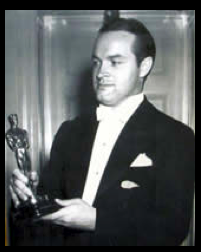
From Bob Hope to David Letterman: Innovation and Inflation
Chapter One: Basecamp
By Steve Howard, CKO
The Knowledge Labs
Table of Contents
Chapter One: Basecamp
Chapter Two: The Ridge
Chapter Three: The Outpost
Chapter Four: The Tribal Territories
“Technological innovation and transition periods occur when a generation is moving out of the school system into the work force in their late teens and early 20s. The single factor driving inflation (was) the baby boom generation's rate of entry into the labor force. Labor force growth correlates with inflation better than any other factor. The lower productivity and high investments required employers to accommodate such a generation peak about three years after entry into the work force. So periods of inflation most commonly occur during transitions between old and new technologies when we see low productivity from the peaking of the old technologies and industries. We also see the need for investment to retool old industries and to launch new ones.”
Harry Dent
Journal of 2020 Foresight: You’ve described the rise in dominance of a scientific mindset swallowing up the world. How technology and media shape the very fabric of culture with unintended consequences – shaping the way we view the world and how we see ourselves in it.
One learning expedition connected reductionistic thinking with the impact of the industrial revolution that shaped the first half of the twentieth century.
Pathfinder: That’s right. We covered the high points in terms of social and technological forces.
J2020F: What about past economic trends and political overtones? Productivity, inflation, deflation, recessions, depressions, government surpluses and deficits?
PF: One of our learning expeditions focuses on the first half of the twentieth century – actually all the way up to the early 1970s. Another traces the reinvention period beginning in the mid-70s well into the high inflation ‘80s.
Trailblazer: They first started out to discover any patterns connecting post “bubble” recoveries in the past -- ending in 1901, 1929, and 1966 -- to the most recent bubble at the end of 1990s.
J2020F: Earlier you told us about the economic significance of the baby boom generation creating havoc from the 1970s on into the inflationary ‘80s.
TB: Right. We’ll get to their impact in the late ‘70s and ‘80s in a little bit.
Lost Explorer: But let’s pick up with their grand parents and parents first. The turn of the century bust laid the groundwork for the marvels of the early industrial revolution.
PF: Peter Gosselin documents how “the price of industrial dyes fell more than 90 percent in just a few years at the end of the last century, transforming the chemical and clothing industries. Automobiles were much cheaper and better in 1920 than they had been in 1905.”
Explorer: The boom in 1929 gave way to very high government deficits, deflation and the great depression period of the 1930s. Against that backdrop, the Bob Hope generation formed their values and adult perspectives.
J2020F: They fought and won World War II and birthed a generation beginning in the mid- 1940s and lasting until the 1960s.
PF: After a depression that lasted a decade and a five-year war, the US economy enjoyed significant productivity gains from the late 1940s through the early 1970s.
J2020F: While President Eisenhower warned against the perils of the military industrial complex, military technology required to arm the US in the Cold War changed the world and America’s role in it.
Eagle: Defense R&D in the late 1950s led to the development of the integrated circuit. Factories in the US and around the world capitalized on the use of smarter machines in the manufacturing process as a result.
J2020F: Didn’t the boom in the 1950s lead to industrial overcapacity?
Explorer: The industrial revolution hit on all cylinders producing great quantities of products destined for the mass market. But supply outstripped demand, so prices fell with increasing competition.
J2020F: So, while Ma and Pa Hope enjoyed commodity prices, their children in the universities and high schools rebelled, creating the media-hyped counter culture.
TB: In the ‘60s and ‘70s baby boomers made the loss of respect for institutions (Supreme Court, Police, Federal Government, Congress) fashionable while fueling the growth of civil rights and the women's movement.
J2020F: The television, a high-priced luxury when it first appeared, by 1970 became household necessity.
Eagle: Good point. Mass-produced TVs delivered mass communications to mass markets. A phenomenon the protesting boomers capitalized on. The news networks broadcast the student revolution and the Vietnam War into everyone’s living room.
J2020F: So, up to the ‘70s when the boomers returned as veterans from Viet Nam, graduated from college and entered the workforce, the mass market enjoyed a saturation of a new variety of products.
PF: And, as we discussed earlier, the shear number created strains on our natural resource base and on the distribution infrastructure.
TB: Scarcities weren’t triggered so much by the growing federal budget deficit, but as they were by the demand for more and bigger cars, more houses and home furnishings.
Explorer: OPEC jumped in to take advantage. They raised their prices holding us hostage in the ‘70s. Overall, as raw materials became scarce, their prices increased.
Eagle: And, to your observation about the boomer’s school-to-work transition during this timeframe, Harry Dent argues, “along with technological innovation, the actual entry of a generation into a work force similarly causes both a high requirement for investment and a period of low productivity.”
J2020F: Eventually technology advances and the accommodation of the generation into the workforce push inflationary forces lower. The amount of energy and raw materials required for growth drops.
Eagle: And that’s what our learning expedition found. The great scarcities of the '60s and '70s developed into increasing surpluses in the '80s and '90s.
Got Knowledge?
Copyright ©2002 - 2006 Aarnaes Howard Associates. All rights reserved worldwide
7:23 AM
Tuesday, April 22, 2003

Agents: Me Go-Go Fast
Chapter Two: The Ridge
By Steve Howard, CKO
The Knowledge Labs
Table of Contents
Chapter One: Basecamp
Chapter Two: The Ridge
Chapter Three: The Outpost
Chapter Four: The Tribal Territories
“The cost of oil dependence has never been so clear. What had long been largely an environmental issue has suddenly become a deadly serious strategic concern. Oil is an indulgence we can no longer afford. Not just because it will run out or turn the planet into a sauna, but because it inexorably leads to global conflict. Enough. What we need is a massive, Apollo-scale effort to unlock the potential of hydrogen, a virtually unlimited source of power. The technology is at a tipping point. Terrorism provides political urgency. Consumers are ready for an alternative. From Detroit to Dallas, even the oil establishment is primed for change.”
Peter Schwartz and Doug Randall, “How Hydrogen Can Save America,” Wired April 2003
Journal of 2020 Foresight: You’ve described the extreme Agents
as charter members of the One Percent Solution club. Which seems like an oxymoron to me.
Trailblazer: I prefer to describe them as “paradoxy-morons.” They’re dumb like-a-fox, often looking at a well-established, mature approach from an offbeat perspective. And what they notice is how limited the traditional way solves the really complex problems.
J2020F: So they don’t identify with the keepers of the tradition – Associates on the one hand, and Academics on the other hand.
TB: That’s right. Both of those groups gravitate to different versions of the Ninety Percent Solution clubs. Academics prefer to distance themselves from the action so as to remain objective. They follow a well-articulated and tested methodology through which they filter all changing conditions. Agents represent the new and untested. The new science, if you will, in direct contrast to the old science.
J2020F: And what about Associates?
TB: As one of my colleagues says, “They drank the Kool-Aid.” They’ve digested the mission of their organization and it resides in their blood stream. When you ask them what they do, they almost always tell you the organization they work for. They’re keepers of the social system – the formal and informal culture. They may change jobs and careers, but all within the same organization.
J2020F: What do you mean by One Percent Solution?
TB: You’re probably familiar with a bell-shaped curve. If you split it in half, on the left-side you have an S-shaped growth path of acceleration. On the right you have the mirror opposite of an “S.” Instead of growth, you find accelerating decline.
J2020F: So, the threat to the 90% mature organization – enjoying their top of the bell -- is the freefall into the valley of despair?
TB: Right. They’ve sustained their innovations from the past, but now their offering is such a commodity that they can’t prop up their perch any longer. If they haven’t invested in enough 1% ideas – organic growth – at the right time, they’ll miss the benefits of accelerating up the next S-curve (the left side).
J2020F: And, extreme Agents, then supply those 1% ideas, right?
TB: That’s right. Joel Barker broke down the lifecycle of a new paradigm into 3 phases along the s-curve – A, B, and C. Likewise, Harry Dent described the phases as innovation, growth, and maturity. Since the 1970s Dent has successfully forecasted how specialized products, services and technologies move from small niche markets into the mainstream.
J2020F: Agents appear in the innovation, A - phases?
TB: Yes, Dent’s contributed a way to better predict when to invest. His work says the time it takes for an Agent to move an idea from a .1% idea to a 1% prototype, and finally to a 10% niche in the marketplace (Innovation), is roughly the same amount of time it takes for that niche to accelerate up the curvilinear curve of market acceptance through 50% to 90% (Growth).
J2020F: And the same time for a mature market to reach saturation?
TB: Exactly. You can enjoy the benefits of being the king of the hill for roughly the same amount of time it took you to move through either of the first two phases.
J2020F: So maturity, from 90% to 99.9% is equal to the amount of time it took to move from 10% though 50% to 90% acceptance?
TB: And, is in turn equal to the amount of time to move from .1% through 1% to 10% market acceptance.
J2020F: I take it that Agents come in several flavors.
TB: That’s right. They may be change agents in organizations or they may be living a more entrepreneurial lifestyle. They collaborate in non-organizational federations, networks, or strategic alliances. Some are inventors. Others are artists, writers, consultants, salespeople, and entrepreneurs.
J2020F: What do they all have in common?
TB: The faith that they have what it takes to bring something new into being. They’re drawn to high risk. They’re capable of anticipating something new and act decisively to establish a new market, industry, technology, or a new scientific discipline.
J2020F: They are what Joel Barker calls the paradigm pioneers? They champion a new paradigm with the potential of resetting the established way of doing things back to zero?
TB: Yes. In early 2003, the author of “A New Kind of Science,” Stephen Wolfram, fits your description.
J2020F: In what way?
TB: Here’s how “Wired” described him for their 4th Annual Rave Awards – in both the Author and Renegade-of-the-Year categories – “Wolfram’s theory that virtually everything – from the patterns on a seashell to the universe itself – is the result of simple instructions is revolutionary.
If Wolfram is correct, nature builds complexity much like a computer program, and his view are likely to change how science is conducted in the lab and taught in the classroom.”
J2020F: Correct me if I’m wrong, but isn’t the Renegade Award given by the readers?
TB: No, you are right. Here’s his profile, according to Wired – “Stephen Wolfram has never been bound by a sense of what’s possible.
He earned a PhD in physics at age 20, and created Mathematica, the premier technical computing software system, before he was 30. With the publication of his epic book, A New Kind of Science, Wolfram has set out to rattle the foundations of research, in the tradition of Galileo and Newton.”
J2020F: So Wolfram fits the description of an extreme Agent.
TB: He’s an AGENT-Agent. Later we’ll get to the other three types of Agents – AGENT-Athlete, AGENT-Associate, and AGENT-Academic, but for now let's continue with our "Running Together" (Athlete) scenario.
Got Knowledge?
Copyright ©2002 - 2006 Aarnaes Howard Associates. All rights reserved worldwide.
6:10 AM
Friday, September 05, 2003

Big City Incomes Discover the Up-And-Coming Boondocks
Chapter Three: The Outpost
By Steve Howard, CKO
The Knowledge Labs
Table of Contents
Chapter One: Basecamp
Chapter Two: The Ridge
Chapter Three: The Outpost
Chapter Four: The Tribal Territories
“The group that left the Louisville-Clarksville area on October 26 (1803) was the foundation of the Corps of Discovery. It was this group that made some of the most important contributions to the success of the expedition. From this group came two of the initial three sergeants, three of the best hunters, and the Corps’ primary blacksmith and gunsmith…. A brief stay at Fort Massac on the lower Ohio (River) provided the opportunity to recruit one of the most important members of the party. George Drouillard, a half Shawnee-half French Canadian hunter, scout, and interpreter, earned high praise from Lewis and Clark.”
James J. Holmberg
Journal of 2020 Foresight: You told us that two learning expeditions forwarded information to Grey Owl so he could synthesize their discoveries into a knowledge base. In other words, sweet spot patterns begin to assert themselves. Can you give us an example?
Explorer: Let’s try using the Birds of a Feather (BOF) knowledge base a little differently than how we demonstrated the migration network from Dana Point (CA), Parker (CO) and Austin (TX) to find Pagosa Springs, Colorado.
Eagle: Why not show some of the synchronicity. Let’s see what happens when we compare the progression of real estate appreciation from innovation, early growth, mid-growth, through late-growth and maturity to the findings from the team profiling the state of Colorado.
J2020F: If I follow you, based on the trend-setting profiles, we should see more and more of the affluent profiles show up as we progress up the growth maturity s-curve, right?
Eagle: Yes, and remember, what we’re focusing on are the Resort Towns at the top of Harry Dent’s list of 9 categories that represent the best places to consider for a lifestyle change, a real estate investment, and or an entrepreneurial venture.
Explorer: Let’s start with Pagosa Springs, Colorado. When you search on its zip code in the Claritas PRIZM ‘s public website you see the complete profile as: Agri-business, New Eco-topia, Grain Belt, Blue Highways, Rustic Elders. Out of the 5 primary neighborhood profiles, only one – New Eco-topia – fits the trend-setting indicator.
J2020F: Are there any other high risk, high appreciation innovation towns in Colorado?
Explorer: Here’s Basalt, Colorado. When you search on its zip code you retrieve Agri-business (same as Pagosa Springs) and two others – God’s Country and Big Sky Families. Basalt includes a trend-setting profile – God’s Country. That is different than Pagosa Springs.
Eagle: Wait, here’s one more. This one has both of the trend-setters – God’s Country and New Eco-topia. And, like both Pagosa Springs and Basalt, shares the Agri-Business profile.
J2020F: What’s it called?
Eagle: Well, it looks like it is an area that includes Carbondale, Redstone and Marble, Colorado based on the shared zip code.
J2020F: So far, then, we’d want to find out more about Pagosa Springs, Carbondale and Basalt, Colorado. Now what about some towns that may not appreciate as much, but should be a little less risky?
Eagle: These would be the equivalent of a 10% breakout in Dent’s s-curve, right when the curve begins to accelerate at the early growth stage. I see Minturn, Red Cliff, Durango, and possibly Estes Park, though it hasn’t been confirmed.
J2020F: Do they show more evidence of trend-setting neighborhoods?
Explorer: Hmm. Interesting. The only one that doesn’t is Red Cliff. But it does have the Agri-business profile as does Minturn and Durango. Red Cliff’s three clusters include Country Squires and Big Sky Families (which show up in Carbondale, Minturn, Estes Park and Durango).
J2020F: So, does that mean we should rule out Red Cliff?
Explorer: Wait a minute. It might be a better place. Look at this.
Eagle: Country Squires. That happens to be an elite exurban family profile – what the Claritas folks call “big bucks in the boondocks” or what Dent describes as “Big City Income in Small Town – as in Lake Arrowhead, and Running Springs, California.
J2020F: Maybe Grey Owl should consider adding it to the list of Dent’s trend-setting profiles. What about the Estes Park profile?
Eagle: Wait, I’ll ask him. It looks like I’ve just received a message from him.
J2020F: Did he accuse you of cheating?
Explorer: Probably a new riddle. He doesn’t stay in one place too long. What is it?
Eagle: Paul Newman, Film Festival, Ghosts in the River, Snow in Hell, and Million Dollars.
J2020F: Doesn’t sound like Estes Park to me. Do we have to solve the riddle to figure out where to meet him?
Explorer: Yes.
J2020F: But we’re leaving Cabo tonight.
Explorer: Don’t worry.
J2020F: OK. Where were we? Oh, yes, Estes Park’s profile.
Explorer: Of the ones on the list it’s the only one without the Agri-Business neighborhood, but it has the most trendsetters: Gray Power, God’s Country, and New Eco-topia.
Eagle: And, it shares Big Sky Families with each of the previous towns, except Pagosa Springs.
J2020F: So the frequent profiles, so far seem to be Agri-business and Big Sky Families. What do we know about them?
Explorer: I’ll take Agri-business. These are the rural ranch and farm families, typically middle aged – from 45 to 64 age groups with a child under 18 still at home. What do they like to do, why go horseback riding, of course. And, like a lot of young California males these days, are likely to won a pick-up truck.
Eagle: Don’t forget other occupations include forestry, fishing, mining and other blue-collar employment. Agri-business cluster falls within Claritas’ Heartlander social group – families practicing self-sufficiency with a low cost of living.
J2020F: What about the other popular cluster, Big Sky Families?
Eagle: Basically, they are a younger version of Agri-business – mid-scale couples with kids under 18, but they’re in the 35 to 64 age groups. Not only a frequent profile in Colorado, but across most of the Western states including Hawaii. At last count, this profile pops up on roughly 33 different towns.
Explorer: They’re a part of the Country Families group that enjoy mid-scale affluence. Big Sky Families fall within the upper middle affluence category in the Claritas affluence categories. Other cluster members in this group include New Eco-topia, River City USA, and Shotguns and Pickups.
J2020F: Now, what about the last of the early growth towns, Durango?
Eagle: Well, it has two zip codes and the same trendsetter profile in both of them, New Eco-topia.
Explorer: And, it diverges from the pattern more than the others.
J2020F: What do you mean?
Explorer: It also has Big Fish, Small Pond. And Golden Ponds, Town & Gowns, Grain Belt, New Homesteaders, Mines & Mills, as well as the Big Sky Families we already profiled.
Eagle: Let’s come back to it later.
J2020F: Any more early growth?
Eagle: No, but you’ll begin to recognize the names of the mid-growth investment opportunities – Telluride, Steamboat Springs, Glenwood Springs, Beaver Creek, Crested Butte, Copper Mountain, Breckenridge, Keystone, and Snowmass.
J2020F: These are somewhere around Dent’s 50% growth rate? Shouldn’t we begin to see more affluent trendsetter profiles, then?
Explorer: Of the first three, Telluride, Steamboat Springs and Glenwood Springs all include God’s Country and New Eco-topia in their zip codes.
Eagle: I’m looking at Beaver Creek, Crested Butte (two different zip codes each with New Eco-topia), Copper Mountain, Breckenridge, Keystone, and Snowmass. All of them, except for Crested Butte as noted, include two out of three trendsetter combinations from Country Squires, God’s Country, and New Eco-topia.
Explorer: Breckenridge has all three. And look at one other pattern. All of them, except Copper Mountain are home to Big Sky Families.
J2020F: Is that it?
Explorer. It is for mid-growth, but we have one late growth or early maturity town – Boulder.
Eagle: In terms of trendsetters, out of Boulder’s 4 zip codes, one zip code includes our Country Squires profile. A second zip code has both Country Squires and God’s Country, and a third includes God’s Country.
Explorer: But compared to the rest, Boulder also diversifies into other, new neighborhood clusters: only one, Towns & Gowns matches the outlier – Durango.
J2020F: What are the other profiles?
Eagle: Greenbelt Families (shared with Parker), Upward Bound, Boomtown Singles, Middle America, Second City Elite, Middleburg Managers, and Smalltown Downtown.
Explorer: Towns & Gowns show up in 3 out of the 4 zip codes. And look at this over here. I know we’re focusing on Colorado, but Boulder’s pattern looks very similar to Reno, Nevada’s.
J2020F: Where does Reno sit on the real estate s-growth curve?
Explorer: Like Boulder, late growth or early maturity.
Eagle: Here are the matching profiles scattered across 10 zip codes in Boulder: Towns & Gowns, Smalltown Downtown, Middle America, Boomtown Singles, Middleburg Managers, God’s Country, Greenbelt Families, Second City Elite, Country Squires.
J2020F: So, for Colorado, those towns in the innovation and early growth attract Agri-Business profiles and Big Sky Families, together with the trend-setting New Eco-topia or God’s Country neighborhoods. In early growth, often both trendsetters show up, as does a more diverse set of profiles – including Towns and Gowns in more mature towns.
Eagle: And, don’t forget the trend-setting profile we just discovered – the Country Squires. Add them to the list if you’re considering a real estate investment.
Explorer: We also have to caution that Colorado, like California, has recently experienced a trend-reversal when contrasted to the over 200 year old migration pattern.
Got Knowledge?
Copyright ©2002 - 2006 Aarnaes Howard Associates. All rights reserved worldwide.
7:28 AM
Thursday, July 06, 2006

Boomer Transcendentalists: Kit Carson, Jedediah Smith and John Fremont
Chapter Four: The Tribal Territories
By Steve Howard, CKO
The Knowledge Labs
Table of Contents
Chapter One: Basecamp
Chapter Two: The Ridge
Chapter Three: The Outpost
Chapter Four: The Tribal Territories
“She’s gonna carry on somehow the Green tradition, if not the Green name, Sun Green. S-u-n Green. Names are funny in the Green family. Ciela Green was the grandmother of Sun. She had two daughters by two different Green brothers. One of their names was Sea, S-e-a and the other was Sky Green… “
Neil Young & Crazy Horse “Greendale”
DOUBLE NICKEL RANCH. Back to the future. The four seasons of the current saeculum -- the Millennial Saeculum -- began in 1943. It began with the birth of the (Prophet / Idealist) Baby Boomer Generation and is projected to last through the Generation Z / (Adaptive / Artist) generation born in between 1997 and 2026 – which equates to an 83 year lifespan.
Journal of 2020 Foresight: We’ve explored the work by Howe and Strauss as a way of tying together hindsight and foresight – to produce insight.
Pathfinder: They provided the hindsight. For foresight we draw upon Harry Dent’s work. He converts their concepts with his demographic, consumer buying and technology adoption research into economic predictions for the personal investment and real estate markets.
J2020F: Before we get to Dent, let me apply hindsight to our outpost adventures. OK?
Pathfinder: Sure. What do you have in mind?
J2020F: During our journey – over 3000 miles through five of eight western states --we physically explored large portions of the Wild West that opened in 1804 when Lewis and Clark launched their expedition chartered by President Thomas Jefferson to discover the land west of the Mississippi as part of the Louisiana Purchase – California, Nevada, Arizona, Colorado and Utah.
Pathfinder: Don’t forget the tip of New Mexico.
J2020F: Oh right at Four Corners. O.K. then, six of eight. I stand corrected.
Pathfinder: We talked quite a bit about the local area history as we visited towns along the way. We came to realize that the Wild West period lasted until 1890 – with the death of Sitting Bull and the capture of Geronimo.
J2020F: Yes, that leads into my question. What did Howe and Strauss call that Saeculum? And who were some of the more famous members of the generations most similar to today’s Boomers, Gen Xers, Gen Yers and Gen Zers?
Pathfinder: Well, first let me point out that we have an exception to the pattern since we’ve got some overlap between The Civil War Saeculum and the Great Power Saeculum.
J2020F: Exception?
Pathfinder: Yes, the Heroes / Civic equivalent of today’s Gen Y were skipped.
J2020F: Skipped?
Pathfinder: The Civil War so disrupted, confused and killed Americans on both sides that Artist Adaptives (Gen Z), officially called the Progressive Generation, ended the Saeculum.
J2020F: Then what happened?
Pathfinder: The “ancestor” Boomer generation – Prophets / Idealists called the Missionary Generation (born between 1860 and 1882) -- kicked off the Great Power Saeculum.
J2020F: In the Outpost we grouped the list of explorers and pathfinders in two different groups – those that followed the rivers and Indian trails and those that blazed the wagon trails that led to the railroad tracks crisscrossing the territories.
Pathfinder: That’s right.
J2020F: How do the pathfinders and trailblazers fit into Howe and Strauss generations as the westward expansion unfolded?
Pathfinder: Our first group (similar to today’s Gen Z Artist / Adaptive generation) included those born in the later years of the Revolutionary Saeculum.
J2020F: And they were called?
Pathfinder: The Compromise Generation born between 1767-1791 – during the Crisis that led to the founding of the United States. The new High in their early adult years corresponded with the 1804 exploration of the West – more accurately pushing the western boundary from Kentucky, Ohio and Missouri from the eastern side of the Mississippi River to the Pacific Ocean.
J2020F: And, they would be?
Pathfinder: Davy Crocket (1786 – 1836), William Clark (1770 – 1838), Manuel Lisa (1772 – 1820), Meriwether Lewis (1774 – 1809), John Colter (1775 – 1813), and Zebulon Pike (1779 – 1813) among others.
J2020F: Ending the Revolutionary period, the Compromise -- Gen Z-like generation was followed by Boomer-like Prophets / Idealists?
Pathfinder: Yes.
J2020F: Like?
Pathfinder: Like those in the Transcendental Generation born between 1792 – 1821 during the High, but who in midlife experienced the Civil War -- Benjamin Bonneville (1796 – 1878), Jedediah Smith (1798 – 1831), Jim Bridger (1804 - 1881), Kit Carson (1809 – 1868), John Fremont (1813 - 1890) and Ben Holladay (1819 - 1887).
J2020F: An awakening follows a high, during which a Gen X-like generation is born?
Pathfinder: Right. The Gen Xer counterparts, the Gilded Generation born between 1822 – 1842, included Gold Rush 49ers and Civil War Vets such as Horace Tabor (1830 - 1899), Mark Twain (1835- 1910) and Wild Bill Hickok (1837 - 1876).
J2020F: Then we skip to the Gen Z equivalent generation? Caught in odd warp of history – no post Civil War civic or hero type appeared, right?
Pathfinder: Yes. We skip to those artist / adaptive members of the Progressive generation, born during a crisis between 1843 - 1859 -- Jesse James (1847 - 1882), Wyatt Earp (1848- 1929) and Buffalo Bill Cody (1846 – 1917).
J2020F: Cody? His 30-year run as the traveling Wild West Show through the United States and Europe at the turn of the century fits the profile well. He advocated the principles of fairness and inclusion through the treatment of Native Americans like Sitting Bull in his shows and on reservations following the Indian Wars.
Pathfinder: And, he mastered the marvels of the industrial age – electricity generators and trains to move a cast of hundreds and to perform at night – as he told the story of a dying romantic and heroic way of life out on the western plains.
J2020F: And, sets up the kick-off to the Great Power Saeculum – from 1860 to 1942 -- with the Baby Boomer equivalent generation – the Missionaries – born between 1860 – 1882 – some of whom attended his shows with their parents.
Pathfinder: During post-Civil War in a period of rural populism rode nortorious members of the Boomeresque Missionary generation -- Butch Cassidy (1867 - 1909) and the Sundance Kid (1867 - 1909).
J2020F: Who seemed to have robbed, passed through or hid out along the towns we traveled through on the Utah leg of our journey.
Pathfinder: At least those signs broke up some of the monotony.
J2020F: The next generation in sequence was conceived at the end of the West – between 1883 to 1900, right?
Pathfinder: Yes, the so-called Lost Generation – with Missionary Parents and G.I. and Silent Generation children, and ultimately Baby Boomer grandchildren.
J2020F: So, the Missionaries were the Boomers of the Great Power Saeculum, right?
Pathfinder: Yup. They were the prophet / idealists. And, the Lost were the Gen Xers, the G.I. were the Gen Yers, and the Silent were the Gen Zers.
J2020F: Or, the nomad / reactives, hero / civics and artist adaptives, respectively.
Pathfinder: Right.
J2020F: But, what about the demographic breakdown today?
Got Knowledge?
Copyright ©2002 - 2006 Aarnaes Howard Associates. All rights reserved worldwide.
5:10 AM
|
|
| |
|
|
|


